Posts

What are TR1 Cells?

Image
Recent research has revealed vital information about the immune system’s response to malaria, focusing on a previously underappreciated immune cell known as TR1 cells . This discovery, published in April 2025, suggests that TR1 cells play important role in mounting an effective immune response against malaria. The findings have implications for vaccine development and the management of other challenging infections. About the Immune System The human immune system is a complex network that defends against infections. It consists of innate and adaptive immunity. Innate immunity provides immediate, non-specific defence. Adaptive immunity, on the other hand, develops a specific response and retains memory of past infections. This is crucial for effective future responses. Role of CD4+ T-Cells CD4+ T-cells are vital in the immune response. They are classified into several subsets, including helper T-cells. These cells activate B-cells and other immune components. The study focused on a subt...
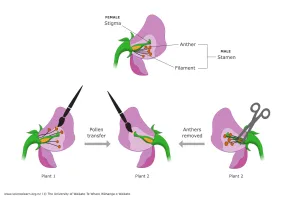
Mendel’s Pea Plants

Image
In recent years, advancements in genetic research have shed light on the foundational work of Gregor Mendel. His experiments with pea plants laid the groundwork for modern genetics. Mendel’s findings, initially overlooked, have been revisited and expanded upon using cutting-edge technology. A recent study has resolved long-standing questions about Mendel’s observations, revealing the genetic factors behind traits he studied. Gregor Mendel’s Early Experiments In the mid-19th century, Mendel conducted experiments on pea plants. He focused on seven traits with two distinct forms, such as seed shape and colour. His systematic approach involved crossbreeding plants and analysing the traits of their offspring. Mendel discovered that certain traits dominated others in inheritance patterns. His work went unnoticed until its rediscovery in 1900. Rediscovery of Mendel’s Work The late 19th and early 20th centuries saw the independent rediscovery of Mendel’s principles by Hugo de Vries, Carl Cor...

Breakthrough in Gene Editing for Rare Disorders

Image
  A nine-month-old boy became the first known recipient of a custom gene -editing treatment. He suffers from CPS1 deficiency, a rare genetic disorder that leads to toxic ammonia levels in the blood. This treatment was developed by researchers at the University of Pennsylvania and the Children’s Hospital of Philadelphia, utilising an advanced technique known as base editing, a refined version of the CRISPR-Cas9 technology. About CRISPR Technology CRISPR stands for clustered regularly interspaced short palindromic repeats. It is a natural immune system found in bacteria that protects against viruses. When a virus attacks, bacteria capture a piece of the virus’s DNA and integrate it into their own genome. This allows them to remember and combat future infections. The CRISPR system uses guide RNA and the Cas9 enzyme to cut and eliminate viral DNA. The Evolution of Gene Editing The CRISPR-Cas9 tool was developed in 2012 by scientists Jennifer Doudna and Emmanuelle Charpentier. They repl...

PLI Scheme for Pharmaceuticals

Image
  The Government of India has renewed its Production Linked Incentive (PLI) scheme to boost domestic pharmaceutical manufacturing. This initiative focuses on increasing the production of critical pharmaceutical products. The Department of Pharmaceuticals has invited applications from manufacturers for 11 essential products. This move aims to strengthen India’s self-reliance in pharmaceuticals and reduce dependence on imports. About PLI Scheme The PLI scheme was first launched in July 2020. It aims to incentivise domestic manufacturing in various sectors, including pharmaceuticals. The scheme has a financial outlay of ₹6,940 crore. It covers 41 products, including key starting materials (KSMs), drug intermediates (DIs), and active pharmaceutical ingredients (APIs). The PLI framework is part of a broader strategy to enhance production capabilities across 14 key sectors. Eligible Products The recent round includes widely used antibiotics and painkillers. Notable products are Neomycin...

New Covid-19 Variant NB.1.8.1

Image
  A new sub-variant of Covid-19, named NB.1.8.1, was identified in India. This variant is a descendant of the Omicron lineage JN.1 and has raised concerns due to its potential transmissibility. The World Health Organization (WHO) classified it as a ‘Variant Under Monitoring’ (VUM), indicating that its mutations warrant further observation, although it is not currently deemed a ‘Variant of Interest’. What Is NB.1.8.1? NB.1.8.1 originated from the recombinant ancestor XDV.1.5.1. Its earliest samples date back to January 22, 2025. The variant has been noted for its six spike protein mutations compared to the LP8.1 variant, and eight mutations compared to JN.1. Preliminary data suggest that NB.1.8.1 may have a higher transmissibility rate due to its enhanced binding affinity to human receptors. Key Characteristics The mutations in NB.1.8.1 include A435S, V445H, and T478I. These alterations indicate a potential for increased transmissibility and some immune evasion. Reports from China ...

Stem cells reverse woman’s diabetes — a world first

Image
  The innovative treatment involved extracting fat cells from the patient and reprogramming them into pluripotent stem cells capable of developing into various cell types. These reprogrammed cells were then coaxed to differentiate into insulin-producing islet cells. Approximately 1.5 million of these islet cells were injected into the patient's abdominal muscles during a minimally invasive procedure. This approach allowed for continuous monitoring using magnetic resonance imaging (MRI), ensuring the safety and functionality of the transplanted cells.  Within 75 days post-transplant, the patient achieved insulin independence, with her blood glucose levels remaining within the target range for over 98% of the day. As of over a year later, she continues to produce insulin naturally, eliminating the need for insulin injections.  🌍 Global Implications This advancement holds significant promise for the future of diabetes treatment. Experts view this as a major step toward dev...

West Nile Virus Detected in UK Mosquitoes

Image
  In July 2023, the UK Health Security Agency (UKHSA) reported the first detection of the West Nile virus (WNV) in mosquitoes in the United Kingdom. Aedes vexans mosquitoes were collected from wetlands near the River Idle in Nottinghamshire during a surveillance programme. This event marks the potential spread of mosquito-borne diseases in new regions, influenced by climate change. About West Nile Virus West Nile virus is a single-stranded RNA virus belonging to the Flavivirus genus. It primarily circulates between birds and mosquitoes. Humans and horses are incidental hosts, meaning they do not play role in the virus’s transmission cycle. Most human infections are asymptomatic. However, approximately 20% of those infected may exhibit flu-like symptoms. Symptoms and Severity While most cases remain mild, severe outcomes can occur. In rare instances, WNV can lead to neurological conditions such as encephalitis and meningitis. These complications are more common in older adults and ...