Posts

Survey Discovers New Reptile and Amphibian Species

Image
  A survey of reptiles and amphibians, known as herpetofauna, was conducted in the Mudumalai Tiger Reserve (MTR), specifically in the Masinagudi Division, from September 7th to 9th, 2024. This survey discovered a large variety of species, with a total of 33 reptiles and 36 amphibians identified. Four of these species might even be completely new to science. Survey Overview The survey covered areas at different heights, ranging from 300 to 2,000 meters above sea level, across different types of habitats. It was led by Deputy Director Arun Kumar P., with guidance from Field Director D. Venkatesh. This was the first full study of herpetofauna in this part of the reserve, which made the findings even more exciting. Potential New Species Four new species were potentially discovered during the survey:Two geckos: one from the Cnemaspis genus and another from the Hemidactylus genus. One skink (a type of lizard). One frog from the Sphaerotheca genus. These species will need more research t...

‘Most Dangerous Bird in the World’ Faces Extinction Threat

Image
  The cassowary, often called the ‘most dangerous bird in the world,’ is at risk due to hunting and habitat loss. With fewer than 5,000 left in Australia, efforts to protect this species are becoming more urgent. What is a Cassowary? The cassowary is a large, flightless bird found in the rainforests of New Guinea and northern Australia. It is known for its bright blue neck, black feathers, red wattles, and a helmet-like structure called a casque on its head. Ecological Importance Cassowaries are important for the environment because they spread seeds through their droppings, which helps maintain plant diversity in rainforests. Studies show that they can adjust their eating habits, which allows them to survive even in areas where habitats are fragmented. Types of Cassowaries There are three types of cassowaries: Northern Cassowary (Casuarius unappendiculatus) : Found in coastal swamps and lowland rainforests in New Guinea. Southern Cassowary (Casuarius casuarius) : The largest, livi...

Scientists Discover New Mechanism for Protein Regulation in Cells

Image
  Scientists at the Biotechnology & Innovation Council — Centre for DNA Fingerprinting and Diagnostics (BRIC-CDFD) in Hyderabad have discovered a new process involving the Wntless (WLS) protein, which is crucial for the development of organs in animals with backbones (vertebrates). This discovery helps explain how proteins move inside cells. The Role of Wntless (WLS) WLS is a protein found in cell membranes and is important for releasing another protein called Wnt3a. Wnt3a helps with signalling that guides the early stages of organism development. WLS ensures that proteins go to the right places in the cell, helping organs like the intestines, lungs, inner ear, and eyes develop properly. Protein Recycling and Breakdown Cells keep WLS levels in check by either recycling or breaking it down depending on what the cell needs. The researchers found that when EYA proteins are missing, WLS gets broken down instead of being recycled. Keeping this balance is important for healthy cell ...

India State of Forest Report (ISFR)2023, Report

Image
  The release of the India State of Forest Report (ISFR), which provides a detailed account of the country’s forest cover, has been delayed for over a year. This delay has led to speculation, particularly among forestry officials. The ISFR is published by the Forest Survey of India (FSI), an organization under the Ministry of Environment, Forest and Climate Change (MoEFCC). Since its first edition in 1991, the ISFR has been an important publication, coming out every two years. What is the ISFR? The ISFR gives a clear picture of the state of forests in India. It has been published every two years since 1991, making it a key source of data for government officials, environmentalists, and researchers. This report helps shape policies and understand India’s forests’ health. Why is the ISFR 2023 Delayed? This is only the second time the report’s release has been delayed, with the first delay happening in 2007. Some forestry officials believe the delay could be due to a significant decli...

Amazon Faces Severe Drought and Record Wildfires in 2024

Image
  In 2023, the Amazon region faced one of its worst droughts ever, leading to a significant drop in water levels in major rivers like the Solimoes. By September 2024, the water level in the Madeira River in Porto Velho dropped to just 48 cm, compared to the normal level of 332 cm. This drastic change caused the Brazilian government to declare state of emergency in six cities. How the Drought Affected Biodiversity and Communities The drought has had a serious impact on both the wildlife and the people living in the Amazon. Many communities depend on rivers for transportation, especially the Indigenous and riverine populations. With rivers drying up, it has become difficult to travel, cutting people off from important supplies like food, fuel, and medicine. The Amazon region, which is home to around 47 million people, relies heavily on its rivers for daily life, making this situation especially difficult. Record-Breaking Wildfires The drought also caused a surge in wildfires. In July...

Kaziranga Sees 86% Drop in Rhino Poaching Since 2016

Image
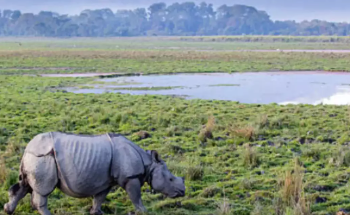
  Kaziranga National Park in Assam has achieved a remarkable 86% reduction in rhino poaching since 2016. This success was highlighted by Assam’s Chief Minister Himanta Biswa Sarma during World Rhino Day, showing that ongoing efforts to protect the one-horned rhinoceros are paying off. Why was Poaching a Big Problem? Between 2000 and 2021, poachers killed 190 rhinos in Assam. The main reason for poaching is the illegal trade of rhino horns, which are highly valued in traditional medicine and as status symbols in some parts of the world. Protecting the one-horned rhino is not just about saving an animal—it’s essential for preserving Assam’s biodiversity. Government’s Commitment to Rhino Protection The Indian government, led by Prime Minister Narendra Modi, has made protecting the one-horned rhino a key priority. When the “double-engine government” (referring to the strong state and central government partnership) took office in 2016, they introduced more focused conservation strategi...

Typhoon Yagi

Image
  In early September 2024, Typhoon Yagi became the strongest storm of the year in Asia, hitting several countries like Myanmar, Vietnam, Laos, and Thailand. It caused devastating winds and heavy rainfall, leading to flooding and landslides. These natural disasters forced hundreds of thousands of people to leave their homes and resulted in the deaths of more than 400 people. Impact on Affected Countries Vietnam: Vietnam was the worst affected. The typhoon caused 292 deaths and destroyed a lot of property, especially in Quang Ninh province and Hai Phong City. The damage is estimated at 40 lakh crore, which will hurt the country’s economy significantly. Myanmar: In Myanmar, 113 people died, and more than 320,000 people had to move to temporary shelters. Due to the severe situation, the country’s ruling government has asked for international help, which is rare given its usual stance. Laos & Thailand: Both Laos and Thailand also suffered from the storm. Thailand experienced its wor...